When a surrender breaks my heart – there are no winners here.

Today I had to pick up two ferrets. Their human mom felt she had no choice.  Her tears were genuine. Out of respect for her privacy I will give only general details.  An unplanned pregnancy, a relationship breakdown and not being able to find affordable and safe housing that allows pets.

This is where I get on my soapbox.  Yes pets can cause damage.  Fish tanks break, cats and dogs have accidents, carpets can be scratched at, birds sit on door frames and poop.  Why can’t landlords charge an additional “pet damage” fee to cover any possible damage.  Perhaps my personal experiences are one sided; but I have washed walls and cupboards, scrubbed fridges and stoves and shampooed carpets in apartments myself and family members have vacated and never once got the damage deposit back. I left those apartments in better shape than when I moved in!

So, these landlords would get the regular damage deposit in addition to keeping these extra Pet damage funds, what a cash grab it could be for them! For every one irresponsible pet owner, there will be at least 2 that will repair any damage themselves.

Instead I have a mom who had to chose between her furry babies and her human baby and herself.  I understand her heartache, I couldn’t imagine having to make that choice and I will not judge her.  By the grace of God I can afford to live in my home and enjoy the companionship of my  two dogs, five birds, an aquarium with fish and of course my furries.

We never turn away  ferrets needing shelter.  There are times I have to admit that I bite my tongue at the “reasons” given for surrendering the ferrets.  When I have a surrender like today, my heart hurts and the only comfort I can give is to promise that I will find a good home for the furries.

How to make Duck Soup /Soupies For Ferrets on a Kibble diet

updated January 2021

As a shelter mom for over twenty-two plus years, I am sure I  have made enough duck soup to fill a child’s swimming pool. The smell of the pureed kibble is not wonderful and in the early years thanks to my sensitive nose I did gag, however I persevered – my ferret’s recovery from the flu, ECE, or surgery depended on it.

Always consult your veterinarian and follow their instructions. I am assuming that you have taken your ferret to your vet for treatment and you are following your vet’s instructions which may include feeding your ferret a “duck soup”. Duck soup should never be given instead of getting prompt veterinarian care.

* Please note this duck soup is only meant as a temporary food source for a few days. This is not meant as the only source of food for your HEALTHY ferret. Your ferret should go back to eating his regular food as soon as possible. How will you know your ferret is ready to transition back to their regular food? Always have a small portion of their regular food available in the cage so the ferret can choose.

**Our  vet recommends our ferrets have Royal Canin brand Recovery  canned wet food. It is the best choice for the first 48 hours.  Because ferrets have not tasted this before, we have found that if you add a drizzle of Furo-tone / Salmon oil (or whatever oil you currently give your ferret ) will entice the ferret to try it. After 48 hours with our vet’s blessing; we switch from the canned wet food  to our duck soup for a few more days until the ferret is showing good improvement.

Recovery brand wet food from vet

Supplies will you need;

  • A large bowl to soak your 2 cups of the kibble they  are currently eating. There are other good duck soups out there for those of you who feed raw.  This is not the time to introduce a new food
  • a kettle of boiling water – you are not boiling their food, you are soaking it in boiled water to be able to puree it. Hot tap water will not turn the kibble into a soft mush.
  • a blender to puree the soaked food
  • ice cube trays or small ziplock snack containers

Food used;

  • minimum of 2 cups of your ferret’s current kibble
    • It is easier to do multiple batches then to double or triple your supplies. I burnt out my first blender.  I now have an industrial blender and that allows me to make huge batches as I do have lots of furries!
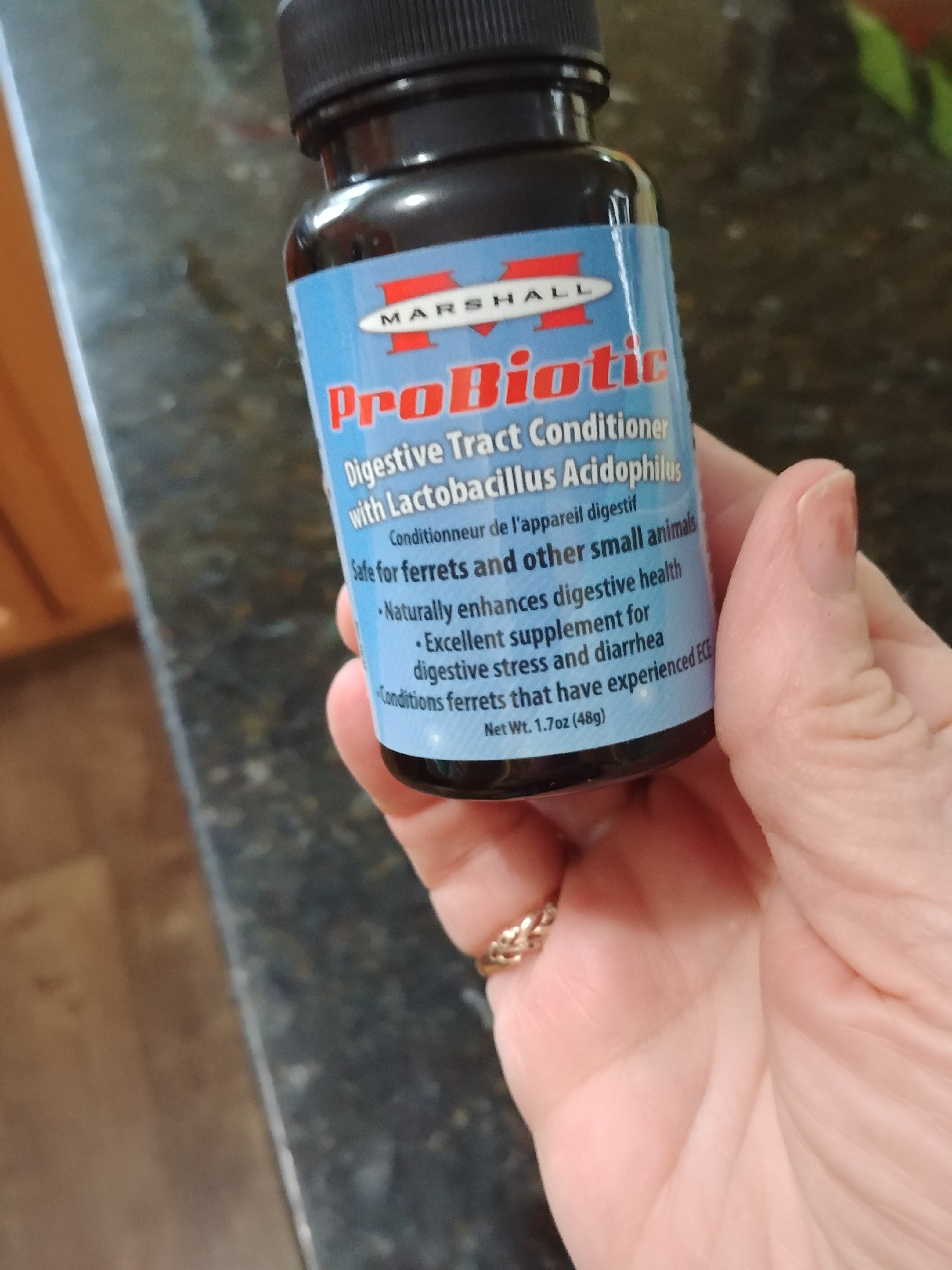
  • a powdered probiotic from your vet  or a powdered probiotic from Marshalls or plain  yogurt. OPTIONAL.  If your only option is the yogurt, only use a tiny amount.  *please check the sugar content on the yogurt. We all know ferrets should not have sugar and some brands of yogurt have way too much sugar (even for us humans). If you are using the yogurt, the amount you will be using for those few days should not be an issue unless your ferret is already battling Insulinoma.  If your ferret has Insulinoma do not add the yogurt.  In the last few years, our vet has prescribed a powdered probiotic and we no longer use the yogurt.  I do know some ferret owners do not have access to the powdered probiotic so the plain yogurt is better than nothing. As an example, Oikos plain yogurt has 6 grams of sugar per cup which breaks down to 48 teaspoons. There is 0.125 gram of sugar in a teaspoon. That is negligible! Consult your vet for a powdered probiotic. The Marshalls probiotic is also now available. When I originally used this recipe, you couldn’t get powdered probiotics.
  •  high protein easily digestible canned wet food from your vet –  Royal Canin Recovery or  a high protein meal replacement such as Glucerna in Vanilla flavor only. A bottle of Glucerna is 237 ml or 50 teaspoons. There is 4.4 grams of sugar in those 50 teaspoons, so using one teaspoon in your duck soup mix would mean 0.088 gram of sugar, negligible for the few days you are using it.  You are using this to add a punch of protein. Do not use the Glucerna if your ferret has Insulinoma. Can’t get the wet food from your vet, a great alternative is  a good quality canned wet cat food containing only water and meat. Chicken with broth baby food is also a good choice.
  • OPTIONAL – the oil based vitamin supplement you are currently using  as an incitement to get the ferret to try the soup.  The shelter currently uses Salmon Oil cut 50% with olive oil. Some of our ferrets will not take Salmon Oil so those ferrets have a 50/50 mix of Canola Oil and Olive Oil.  You are only drizzling a tiny little bit on the warmed up dish of duck soup to encourage your ferret to lick the duck soup.  If your ferret willingly licks up the duck soup without, then you don’t need to use the Oil.

Making the duck soup:

  • Pour boiling water over the two cups of kibble – you are not boiling the kibble
    1. Enough to cover the kibble by one inch
    2. Let soak until kibble is soft and can be broken down with a fork, you may need to add more boiling water as the kibble soaks up the moisture
  • Put 1/2 cup of the mushy kibble in the blender, add enough hot water if needed to help the blender puree.
  • Repeat until the 2 cups of kibble have been pureed.
  • Pour the pureed kibble into the containers you have selected, cool pureed kibble and then freeze
  • please note, you have not added the canned wet food/Glucerna, the probiotic or oil to this step of making the duck soup. These items are added at the time you are warming up the tablespoon or two of duck soup to be served to your ferret.

You can keep pureed kibble frozen until needed, just thaw in the fridge

pureed ferret kibble

pureed ferret kibble

probiotics from Marshalls

probiotic from your vet

Recovery brand wet food from vet

High quality wet cat food such as Nutrience

  • Put one heaping tablespoon or two of the pureed kibble in the dish
  • warm your duck soup in the microwave for a few seconds (10 to 15 seconds) **stir with your finger to ensure there are no “hot spots” that can burn your ferret’s tongue. You want the duck soup warm not hot or “cooked”.
  • Add probiotic as per your vet instructions or Optionally one half teaspoon of Glucerna to the mixture.
  • Add the canned wet food from your vet
  • heaping teaspoon of pureed kibble

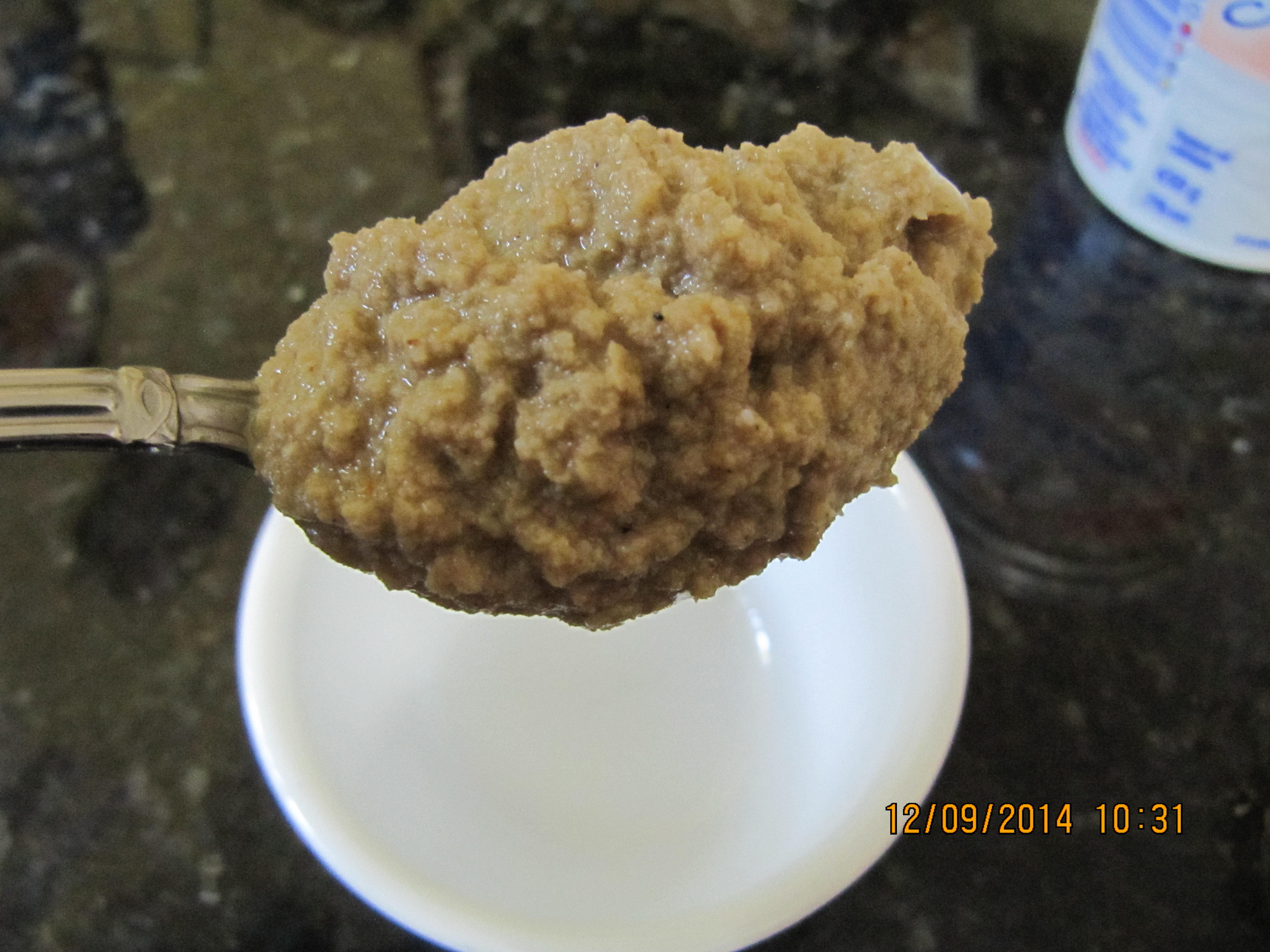
    heaping tablespoon of pureed kibble

    IMG_1141

    Finished duck soup, you can drizzle a small amount of the oil supplement such  as Salmon Oil/Olive Oil/Flax Oil/ canola oil to entice your ferret to try the   duck soup. Optional

Giving your ferret the duck soup:

  • place a towel on your lap
  • hold your ferret in one hand and offer the duck soup dish with the other hand
  • your ferret should slurp down the duck soup

How to teach your ferret to like the duck soup:

If your ferret is not interested in licking the soup at all, drizzling a little of the oil you are using as a supplement such as Salmon Oil/Olive Oil/Flax Oil  on it will make the soup enticing. (It goes without saying if your ferret has never had any  Oil based supplements before this won’t work)!

Some other options are;

  • Apply a little of the duck soup mixture to the tip of your ferret’s nose. The ferret will automatically clean it’s nose. You may have to do this repeatedly  for the first few feedings while your ferret is in reality managing to lick off maybe a teaspoon worth of duck soup.
  • Dab your finger in the duck soup and offer your finger to your ferret. Perhaps even rubbing your duck soup coated finger along the ferret’s back gums. I have known ferrets who enjoy this method that they demand this royal treatment long after they have learnt to like the duck soup.
  • You may have to scruff your ferret, suck up some duck soup in a syringe and apply the syringe to the back corner of the ferret’s mouth. Slowly, gently squeeze the syringe as you do not want to have your ferret “inhale” the duck soup.
    • Never offer the syringe via the front of the ferret’s mouth!
  • Using a baby’s spoon (think Dollarama)  put a little duck soup on the spoon and offer the spoon to your ferret. Believe it or not I have had ferrets who will finish a full dish of duck soup one spoon full at a time, but will not touch the dish itself.

It typically take several days for the ferret to learn to like the texture of the duck soup and willingly lick it right from the dish. Please note that if you go months without offering duck soup you will be back to square one as the ferret will no longer ‘remember’ liking this texture.

When you see your ferret eating their normal dry kibble, that’s a sure sign they no longer need the duck soup.  You might want to continue to Give your ferret a tablespoon  or two once a week so that he will see this as a weekly treat. If your ferret is sick, the duck soup mixture can be offered every 4 to 6 hours depending on whether the ferret is also still eating some hard kibble.

In the shelter sick ferrets get a dish of duck soup for breakfast, lunch, supper and bedtime. Your ferret should not need to be only the duck soup for more than 4 or 5 days.  A critically ill ferret should be under the care of your vet and this recipe would not be suitable.

Miscellaneous Questions:

Q: Why am I using my ferret’s own food – kibble?

A: Because he is familiar with the taste and smell, if the first time your ferret is having duck soup is during an illness this is not the time to introduce a new food and cause further stomach upset.

Q: Why the probiotic?

A: If your  ferret has diarrhea as part of its illness; you need to introduce probiotics to help the ferret.  Your vet clinic may suggest that you use a powdered probiotic that is now available from them.

Q: Why the canned wet food or Glucerna?

A: The canned wet food from the vet or the Glucerna  are a ‘high protein‘ food. You don’t want your ferret using more energy to crunch and eat hard kibble than what he is going to benefit from nutritionally. Licking he high protein food   burns minimal calories so the  nutrition stays on the positive side.

Q: How long should I give my sick ferret the duck soup? You give the duck soup as long as the ferret is too sick/weak to eat his dry kibble.  His dry food should still be available to the ferret in his hospital cage  for him to have if he wants it. Once the ferret is feeling better (watch the litter box) you will know to slowly reduce the servings of duck soup until you are back to offering it as a weekly treat.

Q: Can I give duck soup every day to a healthy ferret?

A: So long as it’s a small portion and not meant to replace a meal, there is no harm.  Lots of ferret owners will give their ferret a teaspoon of duck soup with Melatonin mixed in as an easy way to give the daily Melatonin.

Q: My vet told me to give my sick ferret a can of their Recovery brand wet food – should I?

A: What my experience has shown is that this is a food that is foreign to the ferret and so he most likely will turn his nose up at it and may even gag. However, we know we can get around that. The canned wet food is very important in the first 48 hours.  If your vet indicates the wet canned food is necessary then add a teaspoon it to your duck soup mixture when warming it up.  The idea behind the canned Recovery wet food is the same reasoning;  You want your ferret to burn as few calories as possible eating a high protein food so that the ferret is not expending more energy to eat than what the ferret is gaining. Canned wet cat food is a source of high protein food in an easy to digest formula.  I always have some on hand.  I know some of our members offer it once a week as a treat so that they continue to like it.

You would then want to have your ferret get used to the canned wet cat food while he is healthy.  Stick with Canned wet cat food with ingredients that are water and meat.   Most ferret wise vets will be happy to hear you have introduced them to canned wet cat food.

Q: Why do I keep smelling the duck soup long after feeding my ferret?

A: Well, I would say you are ‘wearing’ some duck soup in your hair, on your arms, maybe a smudge of it across your cheek where your ferret rubbed his face!  If I have had a ferret fight me to take his duck soup I will look like I rolled in the stuff – but I am a crazy ferret mom and will do what it takes even if it means my ‘perfume’ has all the dogs in the neighborhood drooling over me!!

You know you are a crazy ferret mom when……..

I have my grandson Holden every other Sunday for 6 hours, which is always cherished time, I admit to spoiling him (a bit)!

As last time I had to cancel it had been a whole month since his last visit, Holden bounced into the house, gave me a hug and went straight to the kitchen. As I get him from 11:30 to 6:00 pm, he always arrives hungry.

In that month between his last; visit oops something happened in Grandma’s kitchen, much to my grandson’s surprise he couldn’t find any fruit, “what’s all this stuff Grandma?” As I will never pass up to a chance to tease I promptly replied that I thought he might like to try something different for a snack.

Holden gave a very puzzled and worried look because in front him lay an assortment of Bandits Ferret Treats that had recently taken over my fruit bowl. I did have fruit in the bowl, on the bottom and at the back – 2 oranges, 2 bananas and one wrinkly apple, but all Holden saw were bags of different flavored treats. I offered him; Bacon, Chicken, Raisin or Banana flavor – but my silly grin gave it away and he knew I was teasing him (we shared the bananas).

ferret mom's fruit bowl!

Now I do have to clear up why I have ferret treats in my fruit bowl; you see I also have a whippet named Riley, this little guy will eat anything on the counter his paw can drag off. The Bandits treats are yummy, but the resulting bout of diarehea is something I get to clean up, so all the treats have to be as far back on the counter as possible to help keep them out of reach. Before you suggest the ferret cupboard (yes they have a whole cupboard devoted to all their bucket of food and grooming supplies) Riley can easily open that cupboard (by the way, his other name is “No No Bad Dog”). I am sure my ferrets in their cages were holding their collective breaths when they heard me offering up their prized treats!

At the main shelter all the ferrets are offered Ferretone, Bandits treats, the occasional bite of cooked chicken or beef and the odd container of cat treats (such as pounce chicken) but the furries seem to prefer the Bandits treats. Once a week, usually on the weekend, they all get “duck soup”. I give them the duck soup so that when they are sick I will have a high protein, easy to swallow food to help them pull through.

I never give my ferrets anything with sugar, I have had to nurse far too many ferrets with Insulinoma to knowingly put them at risk. Many of the shelter ferrets come in with a craving for sweets and sooner or later they will develop a tumor on their pancreas (Insulinoma). Because I can, in my house the fruit bowl will always have Banditt treats, my family have already figured out I’m crazy – crazy for ferrets!

I hate Duck Soup!

One of my shelter ferrets who came to me this summer is Molly, turns out Molly is a boy! His previous mom was told he was a girl and so for 6 years she thought she had “a big girl”. When I pointed out the “belly button” which only boys have she was speechless. Now Molly know his name very well and will come running so Molly keeps his name. Molly was very bonded to his first mom. She had been allowed to take him to school with her every day and he even slept with her. It broke her heart to bring him to me but she had not been able to find pet friendly housing in Saskatoon where she was heading for university.

I was very worried that I would loose Molly to a broken heart once he realized his mommy wasn’t coming back. I set up a small cage and placed it by my bedside. I put my well worn and smelly nightie in his hammock. I wanted him to bond with me and my smell. The first week was up and down. It was obvious that he was pinning for her but slowly he came out of his funk and started playing.

I tried over and over to introduce Molly to other furries hoping a playmate would give him some needed company. He went from running in fear to simply avoiding the other mild ferrets but he didn’t connect with anyone. Eventually Molly was doing so well that he moved into the main shelter room so that he could continue to be immersed in the other ferrets smells. His cage was right by the door entrance and he could see me coming and going down the hallway.

On Thursday Ivan and Loki arrived at the shelter. These two 5 year old boys put me at capacity and I was wondering who to move them in with. I often get the cage donated with the surrendered ferret(s) but it’s not the lack of cages but the lack of space to put them. Lots of donated cages are sold to help with the costs of food, litter and medical care. Ivan and Loki came in with a Ferret Nation cage which is the cadillac of ferret cages. I want to eventually have all Ferret Nation cages as they are so easy to clean. To set up the Ferret Nation cage I had to do some moving around and retire the last of the Midwest cages currently in use.

The long and the short of it I moved Molly into a different cage and moved it out of the shelter room to accommodate the Ferret Nation cage. Molly moved into another room. All seemed fine. The new boys settle in, met Napoleon and Indie and became instant friends. Great, love when that happens because in reality older ferrets are set in their ways and often don’t want any new friends.

Molly seemed fine in the different cage. Friday was busy day. I checked on Molly in the am before heading out to a funeral. His cage was pristine. Red flag! There should be crumbs on the shelf where the food is. Hmmm. I went from the funeral to Deer Lodge Centre to visit my brother in law and so didn’t get home till after 5:00 pm. I checked on Molly, cage is still pristine. I checked the litter box and found some loose pudding poops. Ok, he is stressed out about the move. I let him out to have some one on one play time with me. Molly made one circuit and found a hidey hole to sleep. I left him to sleep in my bedroom, closed the door and started my Med rounds which takes me an hour.

I offered Molly his favorite treats when I put him back to bed and he took them willingly. I had given him extra cuddles and treats. He would be fine.
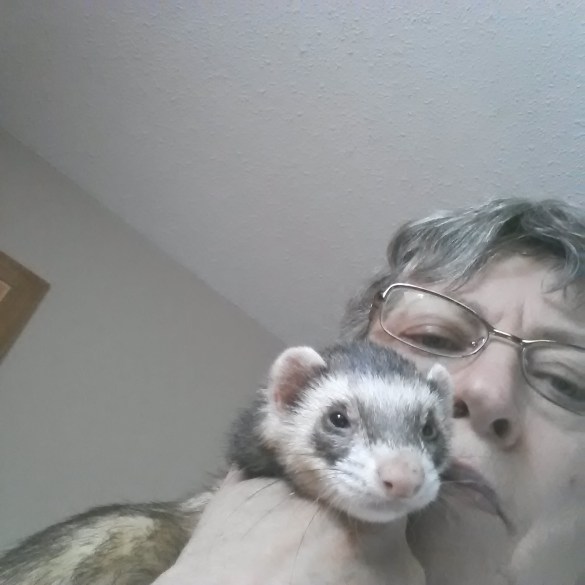
I don't like DUCK SOUP!

I don’t like DUCK SOUP!

When I got up Saturday morning and checked on Molly, his cage was pristine. The litter box had a scant blob of pudding poop! Ok, I have a sick ferret. Not one crumb means he is not eating. I warmed up some Duck Soup and added a little Ensure to make it even soupier. Lots of folks call their duck soup by the name soupies. What is duck soup or soupies? You take your ferret’s dry kibble (2 cups)) and add boiling water to cover the kibble by an inch. Once the kibble is mushy, process it through the blender to make it smooth like pudding. You may need to add some warm water to make it the right consistancy. Some people will add a bottle of Ensure at this point – I don’t anymore as I want to control the amount of Ensure the ferret is getting. Pour the duck soup/soupies into small containers or even ice cube trays and freeze. Now you can pop out a cube as needed or for multiple ferret homes, you have just enough to share with the furries without it spoiling.

I offered the warmed duck soup to Molly, he turned his face away going so far as to push my face away with his front paws. Molly has never had duck soup and I had not had a chance to introduce him to it since he had arrived. Now I have a sick ferret who is going to have to learn to like duck soup on top of feeling yucky, not a stress free way to start.

I tried to offer duck soup off of my finger, wore it across me cheek, I filled syringe and gently squeezed some into the back corner of his mouth. The gagging that ensued would have been funny if I wasn’t so worried. No matter what I tried, the pudding texture of duck soup was not passing his lips. I was wearing the duck soup in my hair, on my arms and Molly was giving me the “why are you trying to kill me look”

On to plan B – Ensure

Ensure is my go to ” food” that has saved many a critically ill ferret, after warming I scruffed Molly, put the syringe at the back corner of his mouth so he wouldn’t inhale the Ensure in to his lungs. I slowly squeezed the syringe dry. Repeat times 5. Now he has something in his tummy but this is not enough to keep him alive, ferrets need to consume 90 cc over the course of a 24 hour period to live. The fight to take the Ensure exhausted Molly so I tucked him back to bed.

Plan C – Trying to think like Molly

So, I lost my familiar cage, I got moved from the familiar room. Molly was pining, he felt “lost” abandoned again,  I could not put him back in the shelter room cage it had been replaced by Ferret Nation cage.

Fortunately, I had the cage he used when he first came in. I set up the cage, added his favorite toy and my nightie. I rolled the cage in to my bedroom and set it up right beside my side of the bed.

After getting another food dish I added the Marshalls food that he came in on. Molly had transitioned to the shelter food and most of the shelter furries don’t care for Marshalls so I always have a bag in my freezer from donations. I went and got Molly and we simply snuggled for awhile. Then I warmed up the Ensure and made him take 5 more 1 cc.

Tucked Molly in to the cage in my bedroom, I did one more thing, I kissed him and told him it was not his time to leave. I needed him to stay and love me for a little longer in return I got lick on the nose. Molly got several more feedings of straight Ensure but if I tried the duck soup he would gag.

IMG_20140908_113640

I tell you I did not get much sleep as I lay there praying for the sound of a ferret crunching his kibble. In the wee hours of Sunday morning I heard that blessed sound. I peeked and Molly was eating from the Marshalls food dish, I fell back to sleep knowing that he wasn’t going anywhere just yet.

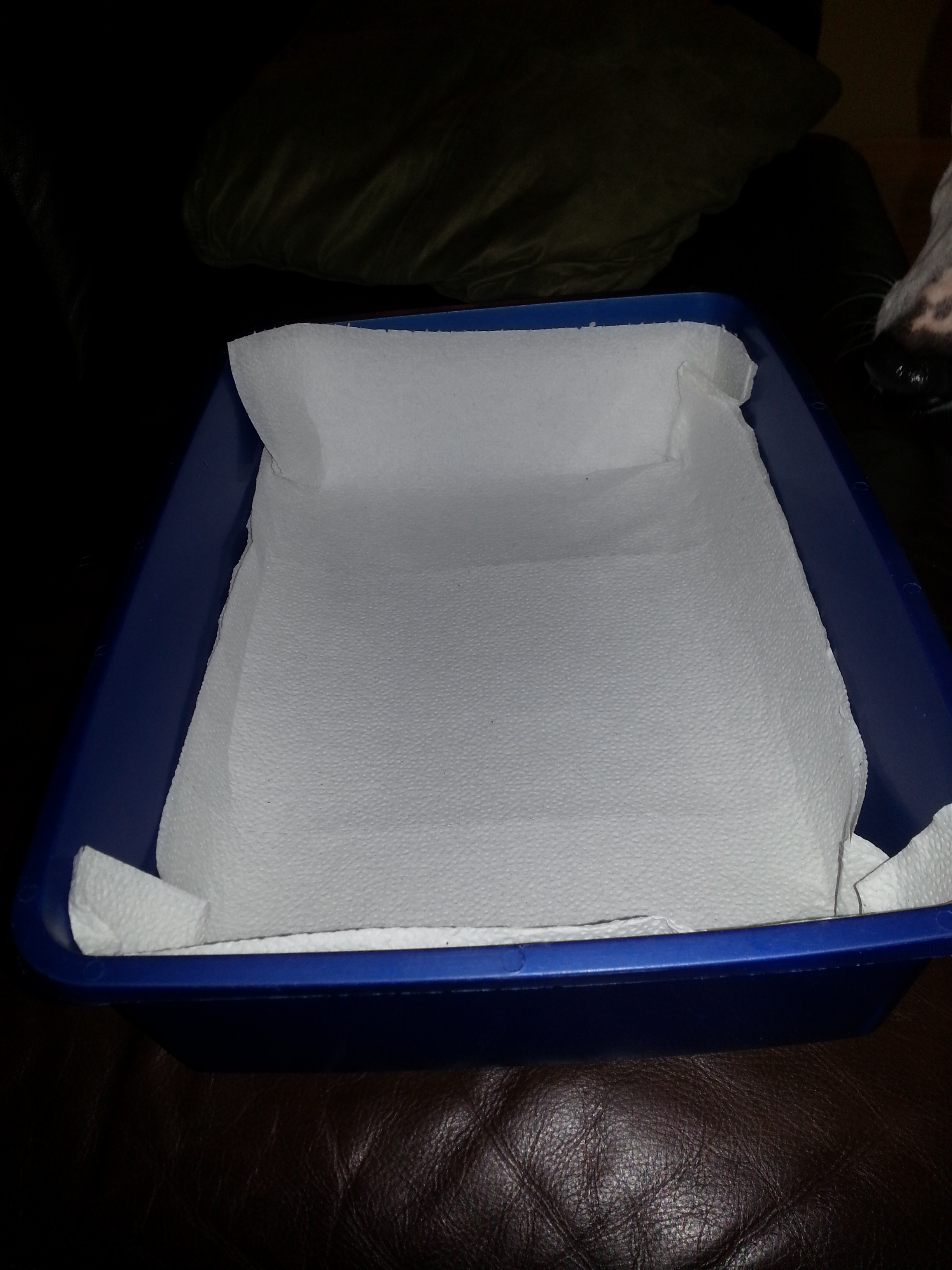
It has been 3 days now and we are still fighting the duck soup, the faces he makes make me want to laugh, you would think I was trying to feed him poison! He is now taking the Ensure without a struggle and I am grateful for that. Molly is eating some kibble but not enough yet; I am still using only paper towels in his litter box so that I can monitor his out put.
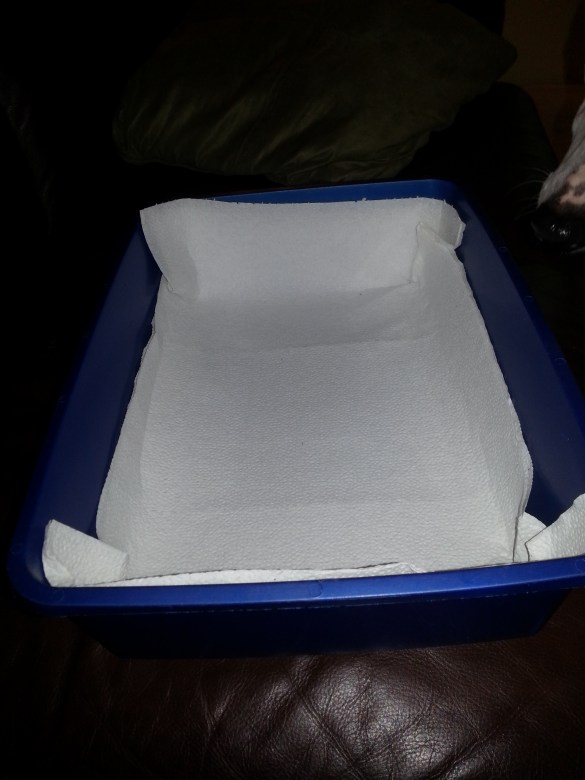
use paper towels to monitor sick ferret's output

use paper towels to monitor sick ferret’s output

We are getting pudding poops, so the tummy is on the mend. At 6 years old, this is going to be harder for Molly to get over than say a 3 year old ferret, it could take a couple of weeks to bring him back to health!

Let’s just say, that Ivan and Loki, the 2 new boys are going to be introduced to duck soup this coming Saturday, better they get used to it now without the stress of being sick!

Proper Ferret Nutrition

Written by Dr. Thomas R. Willard, 1996 Ferrets USA

Make sure the food you choose for your ferret is “complete and balanced for all stages of a ferret’s life as determined in actual animal feeding tests.” A food that has been developed for ferrets for all of their life stages should contain a minimum of 36 percent protein and 22 percent fat, plus a maximum of 2 percent fiber. These portions make up a balanced diet for young, growing and active male and female ferrets.

Most dry cat foods and virtually all dry dog foods exceed 3 percent fiber, which leads to large, smelly stools when fed to ferrets.

Ingredients to look for;

Chicken and poultry byproduct meal, meat meal, whole eggs, liver, poultry or animal byproducts are all excellent primary sources of protein for ferrets. Chicken and poultry byproduct meal or whole chicken meat should always be the first ingredient of a quality ferret food.

A high-quality, simple carbohydrate, such as rice flour or brewers rice, should be the second or third ingredient. These help give the food the correct texture for the best taste, plus improve the digestibility of the food.

Fat from chicken, poultry or other animals should be the third of fourth ingredients. Other important and useful fat sources – such as vegetable oils, lecithin, corn oil or fish oil – should also be present, but further down the list. Wheat, corn of the flours of these grains may also be listed, but generally should not be higher than fifth or sixth from the top of the list.

Some fish protein, such as herring meal, should be listed further down the ingredient panel because it provides high-quality protein to offer nutritional balance. Vitamins, minerals and individual amino acids, such as lysine, methionine and taurine, will also be listed toward the bottom of the label.

What not to feed;

Because ferrets are obligate carnivores, they do not digest vegetables or fruits (like bananas, raisins, apples) or other high fibre foods that humans like to offer as treats or snacks. Most ferrets will not refuse such a snack, but the snacks offer no nutritional benefit over a well-balanced dry food. If given in moderation, an occasional snack will not harm your pet.

Regardless if they are for ferrets, cats or dogs, supplements (oils with or without vitamins and minerals, nutritional tablets, enzymes or powders) should not be necessary if a properly tested and balanced food is being fed.

Other foods or ingredients to avoid are those that contain a high level of vegetable protein, such as soyflour, soybean meal, corn gluten meal or wheat gluten. Foods with high levels of such ingredients should never be fed to a ferret.

Also, a food that lists ingredients in categories as “animal protein products,” “plant protein products” or other collective terminology should never be fed to ferrets or any other companion animal. These are nonspecific, least-cost formulas and usually contain many ingredients that are of poor quality for ferrets. The manufacturer should be able to explain any ingredient you do not understand. Call and ask.

Fact: 

Ferrets do not come to shelters because of behavior problems. 

Ferrets are surrendered to shelters for the same reasons as other pets. Owners may move to a new apartment where pets aren’t allowed, experience a change in work schedule that doesn’t leave enough time in the day to take good care of the ferret, or the most common reason: owners simply get tired of the ferret. Most times the ferret is a wonderful animal who simply wasn’t wanted in the former home.

Food Chart;

Foods such as breads, breakfast cereals, cakes and cookies should not be fed. Many of these items contain refined sugars, which can cause damage to the ferret’s pancreas, resulting in diabetes. Unfortunately, ferrets love sweet foods and may beg for these treats, but you take a serious risk with your pet’s health in offering them.

Because ferrets pass food through their bodies at a rapid rate, they need to eat frequently. Obesity is rarely a problem. Allow the ferret access to dry food at all times in a heavy crock-type bowl or a hanging feeder.

Ferrets have a tendency to develop hairballs, particularly if more than 1 year old. Unlike cats, ferrets do not vomit these masses of hair and can develop intestinal obstructions or become severely debilitated.

To lubricate the hair and keep it moving out of the stomach before it forms a large mass, give the ferret about 1 inch or 1/4 teaspoon of a cat hairball laxative every three days. Ferrets generally love the taste of this sticky substance.