Ferrets are allowed in Manitoba and there is currently no limit on the number of ferrets you can own.
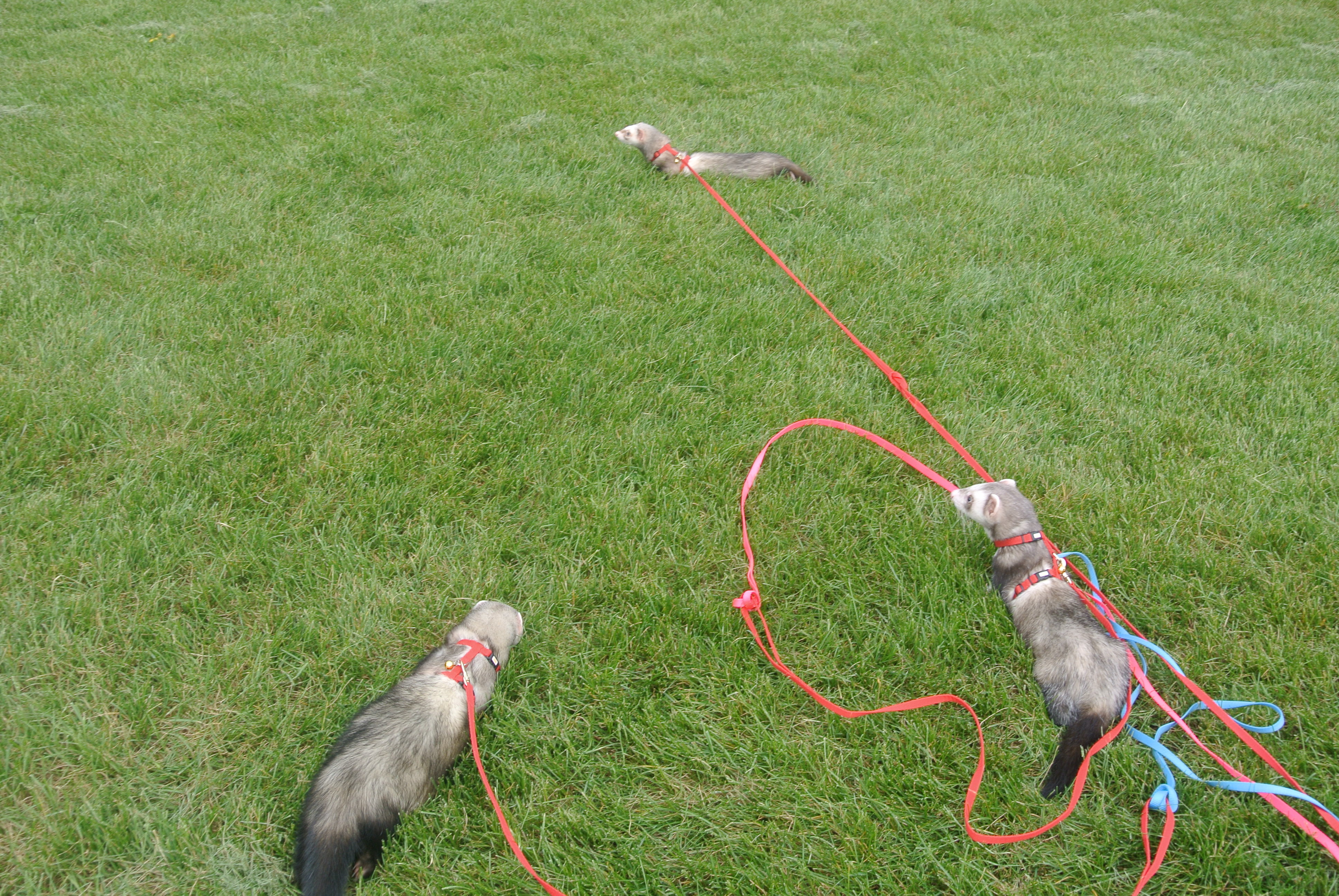
I swear they multiply
The first thing a prospective pet owner should do is check on the legality of the pet where they live. This will take some work to find out, and you should get verification by personally talking to the proper agencies that have jurisdiction over pet related laws in your area.
My advice would be to check the local level of government first – the city, town, or county where you live. This is often the level at which the most restrictive laws are enacted. Call your city hall or Fish and Game department, Department of Conservation or Wildlife. You can also call the humane society, animal shelter, or even veterinarians to get suggestions on whom you should check with on legal issues about your pets.
If your prospective pet is legal locally, I would still check at the state or provincial level. Many states and provinces may not have specific laws, but some (such as California) have strict and wide ranging laws. Call the state wildlife or natural resources department to check on possible restrictions.
You might also want to check Federal Law In the United States a United States Department of Agriculture (USDA) license might be required so contacting the nearest USDA office should be done. Laws vary tremendously by location so the hassle of finding out for sure if a pet is legal is a necessity. It is not entirely safe to assume that if an animal is found locally in a pet store or at a breeder it is legal – reputable stores and breeders don’t carry illegal pets but sometimes it can be difficult to know who is reputable.
Whether the laws are well founded or fair is often debatable, but regardless of this the laws exist and it is incumbent on pet owners to be aware of such laws. If a complaint is made about an illegal pet, these laws are often vigorously enforced and may result in confiscation and even euthanasia of your pet.
Laws pertaining to exotic pets range from local city by-laws to federal regulations. Many cities/towns and counties have laws regarding the number of pets, types of pets, and conditions under which certain pets can be kept. This usually includes dogs and cats as well as exotic species.
Unfortunately, exotic species are often prone to more restrictive laws. I have been doing research to see what laws we have in Canada pertaining to our furry friends. As far as I know we have none regarding the domestic ferret. We are allowed to have them in every province here. There is currently no limit on the number of ferrets you can own. The United States is sadly different however.
California, Hawaii and New York City are the major battlefields in the war against keeping ferrets as pets. In California and Hawaii, ferrets are classified as wildlife and outlawed as pets. In New York City, a Board of Health ruling in June 1999 placed ferrets in the same category of animals that are wild, ferocious, fierce, dangerous or naturally inclined to do harm, lumping them with tigers, lions, and elephants.
Don’t forget about traveling
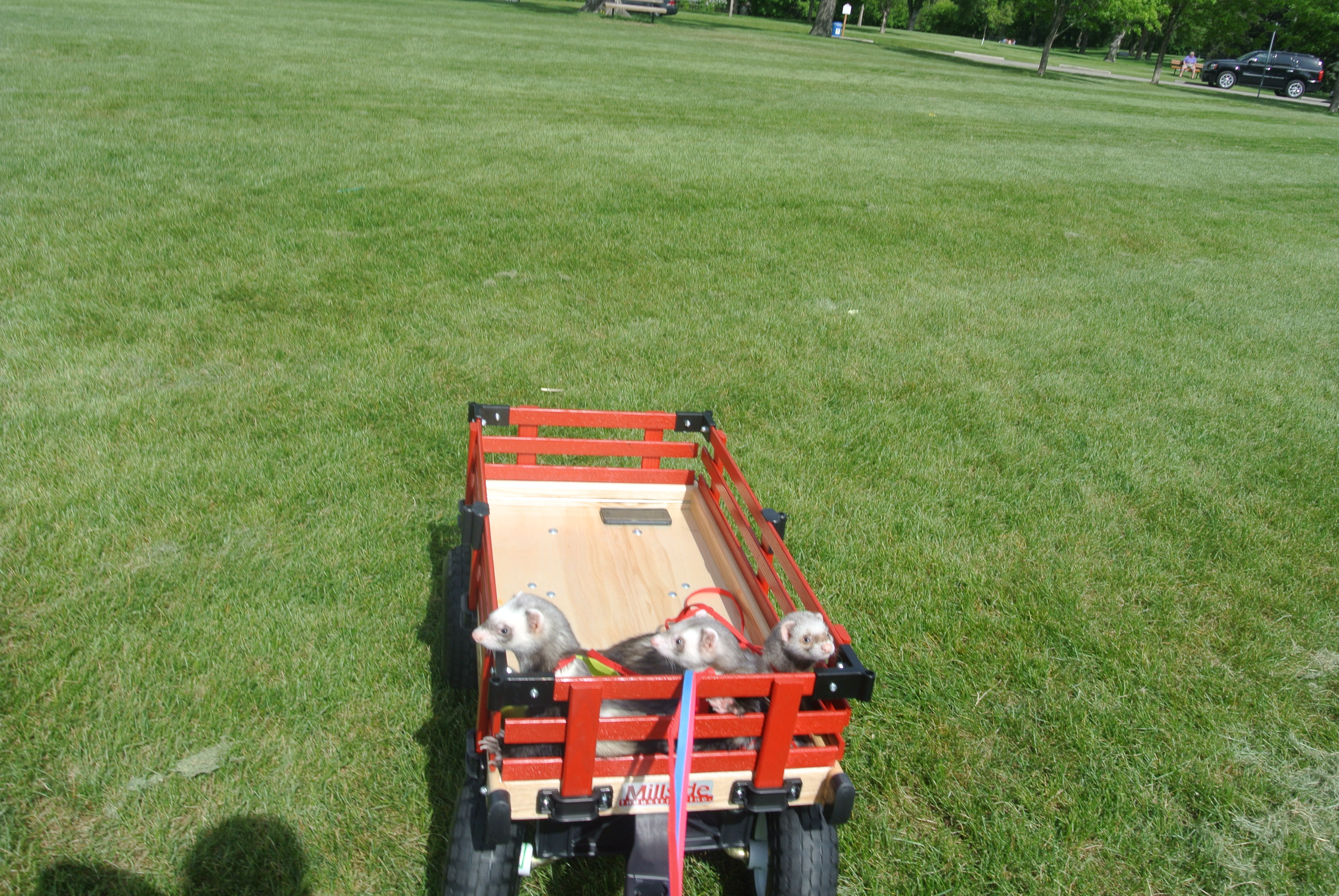
ferret wagon
If it is illegal to have ferrets where you’ll be visiting, think twice about bringing them. Most laws apply to possession of the ferret and don’t care whether you live there or are just visiting.
How Can You Affect Ferret Laws?
Because ferrets are the third most popular companion animal in the United States. The key to changing ferret laws is to understand existing laws, educate people, and work to change laws. Start by examining the complete copy of the animal control code, and discuss the code with animal control and humane authorities. Then work to educate people, ferret partisans are working hard to defeat the last of what they consider arcane and unenforceable bans.
Australia – It is illegal to keep ferrets as pets in Queensland or the Northern Territory; in the ACT a licence is required.
Brazil – They are allowed only if they are given a microchip identification tag and sterilized.
New Zealand – It has been illegal to sell, distribute or breed ferrets in New Zealand since 2002 unless certain conditions are met.[35]
Portugal – It is illegal to keep ferrets as pets in Portugal. Ferrets can be used for hunting purposes only and can be kept only with a government permit.
United States – Ferrets were once banned in many US states, but most of these laws were rescinded in the 1980s and ’90s as they became popular pets. Ferrets are still illegal in California under Fish and Game Code Section 2118[36] and the California Code of Regulations,[37] although it is not illegal for veterinarians in the state to treat ferrets kept as pets. In November 1995, ferret proponents asked the California Fish and Game Commission to remove the domesticated ferret from the restrictive wildlife list. Additionally, “Ferrets are strictly prohibited as pets under Hawaii law because they are potential carriers of the rabies virus”;[38]
The territory of Puerto Rico has a similar law to Hawaii.[39] Ferrets are restricted by individual cities, such as Washington, DC, and New York City.[39] They are also prohibited on many military bases.[39] A permit to own a ferret is needed in other areas, including Rhode Island.[40]
Illinois and Georgia do not require a permit to merely possess a ferret, but a permit is required to breed ferrets.[41][42] It was once illegal to own ferrets in Dallas, Texas,[43] but the current Dallas City Code for Animals includes regulations for the vaccination of ferrets.[44]
Pet ferrets are legal in Wisconsin, however legality varies by municipality. The city of Oshkosh, for example, classifies ferrets as a wild animal and subsequently prohibits them from being kept within the city limits. Also, an import permit from the state department of agriculture is required to bring one into the state.[45]
Japan – In Hokkaido prefecture, ferrets must be registered with local government.[46] In other prefectures, no restrictions apply.



 Manitoba Ferret Association