Found Ferret

There is a ferret in my back yard/under my deck/in my garage!

Several times each year the Manitoba Ferret Association will get a call from a concerned home owner concerning a lost ferret hiding in their garage, under their deck or up a tree! I am not here today to give you a detailed history lesson about the animals belonging to the Mustelid  family, I simply want to give you a quick reference.

Please note our domesticated ferret does not climb trees! They have no sense of depth perception and would hurt themselves; Fishers, Martins, weasels do climb trees.

The wild cousins of the domesticated ferret are:

Minkmink2

MINK

Has a small white patch under the chin, dark brown, or shiny black coat – lives along the river banks.

240px-Fisher_(animal)

FISHER

Very efficient climber, solid colour.

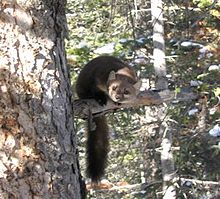
Pine martin

PINE MARTIN

Lighter in color and smaller than the fisher.

Treed marten

TREED MARTIN

weasel

weasel in winter

weasel3

WEASEL

Weasel or Ermine as it is referred to in the Winter.

JaceLokiTurnip

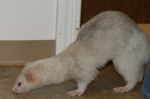
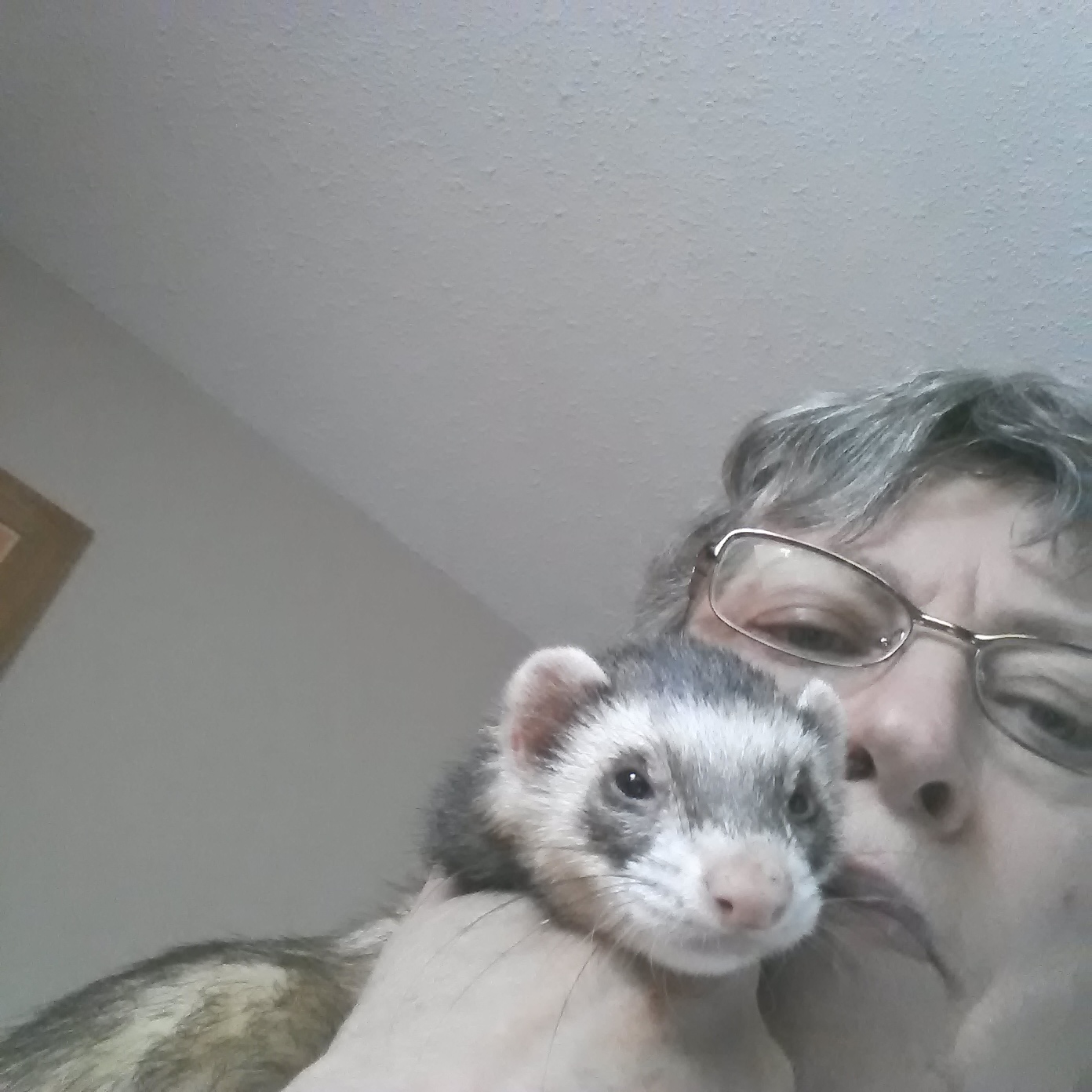
DOMESTICATED FERRET

Last but not least our domesticated ferret which comes in all hues of brown, black, even in white.  So it is understandable to non ferret owners how you can make a mistake.

**Photos of the wild animals are from Wikipedia. Ferrets pictures are from Zoë Rose and Deb K.

Ferret First Aid Kit

It is highly recommended to always have a first aid kit on hand so you will be able to take care of your ferret should the situation arise.

Below is a list of required items to keep on hand;

  1. Emergency phone numbers; make sure you have the vet information easily accessible and any other contact needed.
  2. Ferret photos/vaccination records; it is also a good option to have photos of each ferret and records of vaccination on hand.
  3. List of all medications your ferret is currently taking.

Emergency food ideas;

  1. Jars of meat baby food-chicken with broth or chicken cooked/ground down in food processor/frozen in butter tubs/plastic containers (see Duck Soup)
  2. Light Karo syrup or honey (for quick calorie boost)
  3. Pedialyte or gatoraid (for de-hydrated ferret or just to keep system flowing)
  4. Can of Royal Canin Recovery canned wet food (you get this from your vet) easily digested food for the sick monsters
  5. A probiotic such as Marshalls probiotic
  6. Canola or olive oil (something to help move bad indigested stuff through)
  7. Petromalt or plain Vaseline  for hairballs use for everyday or every other day

Cleaning, Lotion or bandages;

  1. Calamine Lotion for balding ferrets, (relieves itchy skin and minor irritations from scratching)
  2. Hydrogen Peroxide (for cleaning cuts)
  3. Ear cleanser
  4. Eye wash/rinse
  5. Gauze pads Gauze wraps
  6. Washcloths
  7. Adhesive bandage tape (cloth tape holds the best)
  8. Styptic Powder or flour (for bleeding nails)
  9. Antibiotic ointment such as neosporin (for soothing and protecting cuts and scrapes)
  10. Bene-bac (for replacing beneficial bacteria in the digestive tract after illness or diarrhea) – can be purchased com
  11. Desitin (for rash and burn relief) or Any Diaper Rash Ointment 

Petroleum Jelly (to help move a blockage through and for easing in the thermometer)
  12. Kaopectate/pepto bismol/pesid/tagament (for diarrhea and soothing the tummy)
  13. Immodium liquid (for diarrhea)
  14. Baby wipes (for general cleanup)
  15. Pediatric Liquid Benadryl ( for counteracting allergic reactions)
  16. Heating Pad ( to help maintain body temperature in a young or sick ferret)

Molly update

Molly is my 6 year old surrender who has very much bonded with me.  Two recent changes in his place at the shelter sent him into a tail spin. I not only changed his cage, I also moved him out of the shelter room.  His reaction was a complete depression – he stopped eating!

I moved him into his familiar cage and moved the cage beside my bed; adding my used nightgown to his hammock so he knew his new Mommy was still with him.

Molly's cage

Molly’s cage

I then started him on duck soup as he was rapidly loosing weight!  Molly had not eaten for 48 hours and it showed!  Molly had never had duck soup and oh boy oh boy, what a fight I had with him.  The first few feedings saw me covered in the stuff as he gagged, shook his head, wiped himself all over my face and hair and fought me tooth and nail.  I had to resort to syringe feeding him and he thanked me by peeing on me! Molly slowly accepted the duck soup. We graduated from syringe, to finger to baby spoon and last night when I offered him the dish of duck soup he stuck him tongue in and went to town!  My little man had come around.

The weight loss is gone, the diarrhea is gone and he is once again doing his walkabouts!  Yes he is still beside my bed!  I can’t help it; I have to spoil him a little.

Molly loves his Mom

Molly loves his Mom

Lost Ferret Protocol! What to do when your ferret goes missing!

You can’t find your ferret! You have just spent the last hour or two looking in every nook and cranny in your house or apartment! Your ferret was asleep behind the TV or so you thought when your company was leaving! Your ferret was asleep in the bedroom when you took out the garbageor when you opened the door for just a second!

Before starting your search outdoors, you will need the following:

  • Pictures of your ferret: the more recent the better it  and who doesn’t have tons of pictures of their fur babies on their phone or laptop
  • Squeaky toy: that you have used to train your ferret to come to you with.
  • Treat bag: that you normally shake and he comes running for his treat
  • Flashlight: if it is after dark

Step One:

  1. Leave the front door ajar slightly – in the off chance that your ferret will come home while you are out looking. Do this only if you have someone home to watch the door. I have gone looking outside; positive the ferret had escaped only to be greeted by said ferret at the door when I came home.  You don’t want your ferret leaving the house while you are out looking! Stranger things have happened!
  2. Call your ferret, squeak that toy, shake that bag of treats.  Your neighbours will hear you even if your ferret doesn’t and you can alert them to the fact that you are looking for your lost ferret.
  3. Check the perimeter of the house/apartment block. Ferrets instinctively avoid being out in the open
  4. Check under bushes and shrubs.
  5. Ask permission to check out garages that have their doors open
  6. Check under decks, asking permission if you must go on someone else’s property.
  7. Check in woodpiles, asking permission if you must go on someone else’s property.
  8. Alert all your neighbours in a two or three  block radius, north, east, south and west.
  9. Enlist the neighbourhood children ages 7 or 8 and up to help you look. Show them a picture of your ferret. Tell them not to try and pick up the ferret but to call for help.  Offer a small reward. Children know all the best hiding spots from playing hide and seek.
  10. If you have multiple ferrets, take the lost ferret’s cage mate out on a leash and walk the neighbourhood.  The scent of the cage mate you are walking may guide your lost ferret home.

Step Two:

  1. Print up lost ferret notices and drop them in every mail box for 4 or 8 blocks in every direction. Yes, ferrets can travel that far!
  2.  Drop off a poster of your lost ferret to every pet store in the area
  3. Drop off a poster of your lost ferret to every vet clinic in the area.
  4. Call the Humane Society and alert them to your lost ferret
  5. Call the MFA and alert them to your lost ferret (didn’t think I should have to put this one in, but, for those who were to upset to think, just a gentle reminder that folks will often call us to come capture or pick up a lost ferret.)
  6. Call the local radio station that does lost alerts
  7. Use social media to alert them of your lost ferret. Lost Dog Alert will post regarding lost ferrets. use every lost alert facebook page you can reach

Step Three:

  1. Take your ferret’s carrier (with food, water and blanket)  or cage if  possible and set it outside by the door. The smell of food and his blanket  just might help guide him home.
  2. Some folks will offer a reward and this is something to consider
  3. Retrace your steps, checking the same areas several times. A friend of mine was following her ferret’s paw prints in the snow. They went around the house and back and around again. She stopped and looked behind her to see her ferret had been following her. So, your ferret may be following your scent.


Making your ferret a home

Ferrets do need daily playtime outside of their cages, but they usually still spend a fair amount of time in their cage. A large, well designed cage is a necessity.

Some features to look for are; solid floors and shelves (wire mesh is hard on the feet, although you can cover with a towel), balconies, and ideally solid ladders. Multi-level cages are nice, but depending on the arrangement of the levels, falls are possible. Get extra shelves or use hammocks to make cages safer as needed.

You should purchase and set up your ferret’s cage prior to bringing them home, the cage will serve as “home base” for your new pet and should be ready and waiting upon his arrival. Below are some pointers for setting up your pet’s new domain.

Comfort Counts – There are many options out there in terms of the type of material from which your cage will be built. Metal, plastic, and various forms of wire or mesh are a few that come to mind (wood is not recommended).

**Manitoba Ferret Association has used cages for sale**

In choosing the best type of cage for your ferret, consider how easy it will be to clean. Will urine and food odors seep into the material and be impossible to scrub away? Does the cage offer easy dismantling or removal and replacing of each level so that you can clean all the nooks and crannies?

Ferrets aren’t known for their neatness, and will make messes in places you have only imagined.

If you choose a wire or mesh cage, be sure to provide adequate bedding, old blankets, towels and clothing work fine. The goal is to make sure that the pads of your ferret’s feet are not injured or sore as a result of walking around on wires or mesh all the time. Wire or mesh-type cages do have the advantage of allowing you to purchase the types of litter boxes and food dishes that can be hooked to the side of the cage, making it harder for your ferret to overturn them.

Arrange your ferret’s cage so that each “function” has a designated place. Setting up a safe and comfortable home for your new companion will help him feel right at home. You wouldn’t want to live in an unclean house, and neither does your ferret! A clean cage is essential to your ferret’s overall well-being.

Accessorize – Equip your ferret’s cage with the following:

1. Litter pan, or pans, depending upon the number of ferrets in the cage and how stubborn your pet is regarding “potty training.”

2. Dish that holds a good amount of food and is difficult for your ferret to overturn. Heavy dishes or those that can somehow be hooked to the side of the cage work best.

3. Large bottle or second dish that holds plenty of fresh water, keep the water near the food.

4. Area designed especially for sleeping, with either extra bedding or a hammock or two. Ferrets love to curl up in hammocks to sleep, but will also enjoy comfy hideaways such as the leg of an old pair of your sweatpants.

5. Do not keep toys in the cage. Your ferret may chew the toy & cause itself a life threatening blockage

Part of responsible ferret ownership is cleaning your ferret’s cage regularly. This includes scooping litter, wiping down the cage, washing bedding, and other daily or weekly tasks. Because your ferret’s cage is a relatively small living area, it’s very important to make sure that any mess is cleaned up promptly.